
The Ultimate Guide to Learning the Holy Quran: A Journey of Faith, Knowledge, and Peace
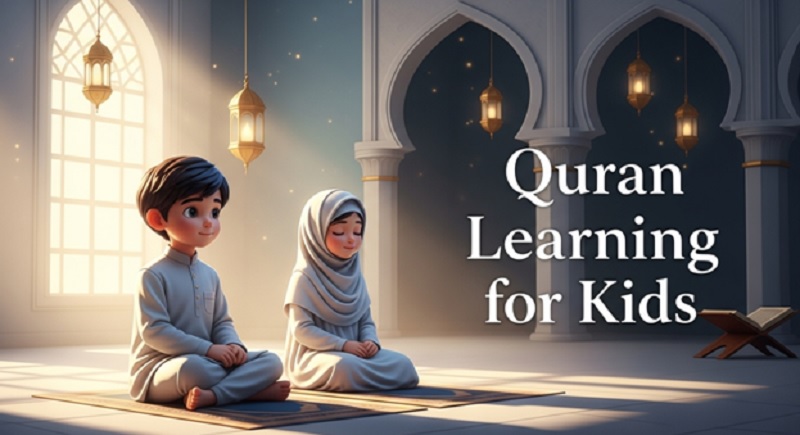
It is not only a reading process but a spiritual process which makes a person change his heart, mind and soul, by studying the Holy Quran. There is not only the guide book of Allah, the Quran, but also it is a whole code of life, which was given by Allah (SWT) to the whole humanity.
In the modern time of nonstop rush and distractors in all directions, studying the Quran provides the inner tranquility, ethical clarity, and meaning of the world that surpasses the disorganized world.
On the one hand, you are a beginner who makes your first lesson, you are a parent who is interested in Quran education to your child, or you are a grown-up person who wants to drift closer to the words of Allah, the Quran learning rewards you with myriad benefits in this world and in Hereafter.
Why Learning the Quran is Important
The Holy Quran is the ultimate source of guidance for Muslims. Allah (SWT) says in Surah Al-Baqarah (2:2):
“This is the Book about which there is no doubt, a guidance for those conscious of Allah.”
Learning the Quran strengthens our connection with Allah, helps us understand the purpose of life, and guides us to live according to Islamic principles. When we read and reflect on the Quranic verses, we find solutions to moral, emotional, and social challenges.
Moreover, the Prophet Muhammad (peace be upon him) said:
“The best among you (Muslims) are those who learn the Qur’an and teach it.” (Sahih Bukhari)
This hadith highlights that Quran learning is not only an act of worship but also a means of becoming among the best in the sight of Allah.
Stages of Learning the Quran
1. Learning to Read (Qaida and Tajweed Basics)
All learners begin at the lowest stage which is getting to know how the Arabic alphabet and pronunciation are. New learners or children typically start with Noorani Qaida or other primers, which entail the introduction into the field of Arabic letters, the sounds of vowels and words joining.
When one has mastered the alphabet, the second thing he/she needs to master is Tajweed, which is the correct pronunciation and recitation of Quran. Tajweed makes certain the pronunciation of every letter is correct and did not distort the original meaning of the words.
2. Understanding the Meaning (Translation and Tafsir)
After learning how to recite the Quran in an excellent way, the second phase is to comprehend its meaning. The study of Tafsir (translation and interpretation) enables the learners to understand the context and wisdom of each verse. This phase enhances the level of spiritual knowledge and aids in the application of the Quran in everyday lives.
3. Memorization (Hifz-e-Quran)
One of the greatest honors which a Muslim can attain is memorizing of the Quran. Individuals who memorize the Quran end up being rewarded a lot. Nevertheless, Hifz needs control, routine and instructions of a qualified teacher. This can be achieved through modern online Hifz programs of students of all ages.
Benefits of Learning the Quran
1. Spiritual Growth and Peace
Reciting and reflecting upon the Quran brings serenity to the heart. Allah says in the Quran:
“Verily, in the remembrance of Allah do hearts find rest.” (Surah Ar-Ra’d 13:28)
When you read or listen to the Quran regularly, you feel spiritually uplifted, and anxiety begins to fade.
2. Guidance in Daily Life
Quran teaches patience, compassion, honesty and justice. Its teachings enable believers to come up with righteous choices about personal, family, and social issues. Each verse is an eternal wisdom applicable to each generation.
3. Rewards in the Hereafter
Each letter of the Quran brings blessings. The Prophet (PBUH) said:
“Whoever reads a letter from the Book of Allah will have a reward. And the reward will be multiplied ten times.” (Tirmidhi)
Thus, even a few minutes of Quran reading can multiply one’s good deeds immensely.
4. Strengthening Family Bonds
The family learns and recites the Quran which fosters love, faith and unity. By promoting their children to read the Quran, parents create a good Islamic background in the house.
Modern Ways to Learn the Quran
Previously, Quran education only fell under local mosques or madras. But now with the digital technology it can be accessed by anyone at any place.
1. Online Quran Classes
Quran online academy is a system that has linked students with certified teachers across the globe. In the live one-on-one classes, the learners are enabled to learn Qaida, Tajweed, Translation, and Hifz as per their schedule.
This is particularly useful to the working adults and children in non-Muslim countries who might not be able to find local teachers.
2. Mobile Apps and Digital Tools
There are many applications in mobile that provide Quran reading, audio recitation, and translation. This is because these tools will enable you to practice anywhere and continue with your routine of learning the Quran.
3. Interactive Learning Methods
Visual aids, quizzes and storytelling techniques are being employed by modern Quran academies in order to make the lessons interesting. Interactive sessions are especially liked by children and bring fun and spirituality in learning.
Tips for Effective Quran Learning
- Define Learning Goals: Determine what to accomplish through Quran study, whether that is reading with fluency, understanding what you read, or memorizing specific surahs.
- Be Consistent: Find a set time each day for studying the Quran. Learning for 15 minutes every day is better than a long study session done irregularly.
- Find a Qualified Teacher: Learning from a teacher who is experienced ensures that you will be taught the proper pronunciation and deeper understanding of what you are reading.
- Review Regularly: This is one of the best ways to memorize and retain things long term.
- Practice with Intent: You should always begin with Bismillah, and ensure that you have made a true intention to please Allah.
Common Challenges and How to Overcome Them
Many learners face difficulties such as lack of time, pronunciation errors, or difficulty memorizing verses. The key to overcoming these challenges lies in patience and consistency.
- For busy individuals, online classes offer flexible timing.
- For pronunciation issues, focus on Tajweed and listen to qualified Qaris.
- For memorization, practice small portions daily and recite them in your Salah.
Remember, the Quran itself encourages us to keep striving. Allah says:
“And We have certainly made the Quran easy to remember, so is there anyone who will remember?” (Surah Al-Qamar 54:17)
Conclusion
To learn the Quran is more than an obligation of your religion; it is a lifelong engagement that will deepen your faith and grant you peace of heart. You can embark on this journey as a child or an adult; of course, you will always benefit from linking to the Quranic path of knowledge.
In the present digital age we live in, the barriers to learning the Quran have been officially erased. With the vast online educational environment, and the ability to connect to teachers from other parts of the world, every Muslim can learn authentic Quranic education from the convenience of their home.
And to make the Quran your life-long companion, read it daily, comprehend the meanings, and apply it in your daily life. As you continue with this sacred engagement, you will come to find that each word of the Quran invites you closer to Allah and saturates your life with light, wisdom, and peace beyond this earthly life.


